Accelerating solar innovation through partnerships across recycling, upcycling and performance optimisation
As solar PV deployment grows, the industry faces increasing pressure to improve both system performance and end-of-life sustainability.
For EtaVolt, scaling its end-to-end PV lifecycle model required more than standalone capabilities. While the company had developed technologies across regeneration, lifecycle reassessment and recycling, it needed to strengthen its broader ecosystem to unlock greater value. Specifically, EtaVolt sought to:
- unlock higher-value material recovery from its recycling processes
- explore technologies that could enhance solar panel performance
- validate its solutions through real-world deployment
Addressing these areas required access to complementary expertise and partners, while reducing the risks associated with scaling new technologies in an evolving solar landscape.
To support this, EtaVolt worked with IPI Singapore to identify and collaborate with complementary partners across the solar ecosystem. Through targeted introductions and support, these partnerships progressed from discussions to pilots and real-world validation.
To strengthen its circularity model, IPI Singapore connected EtaVolt with Arceus, a Singapore start-up, to explore upcycling waste glass from solar panel recycling into higher-value materials, moving beyond conventional recycling outputs.
To enhance solar panel performance, EtaVolt was also matched with Coalot Tech during TechInnovation 2024 to explore a self-cleaning nanocoating solution. The technology demonstrated over 5 percent improvement in solar panel efficiency during the pilot testing, while reducing maintenance needs. This created opportunities for EtaVolt to explore how performance-enhancing technologies could complement its PV lifecycle solutions, with a pilot involving Vector Green and Sembcorp Solar to validate performance in Singapore’s operating conditions.
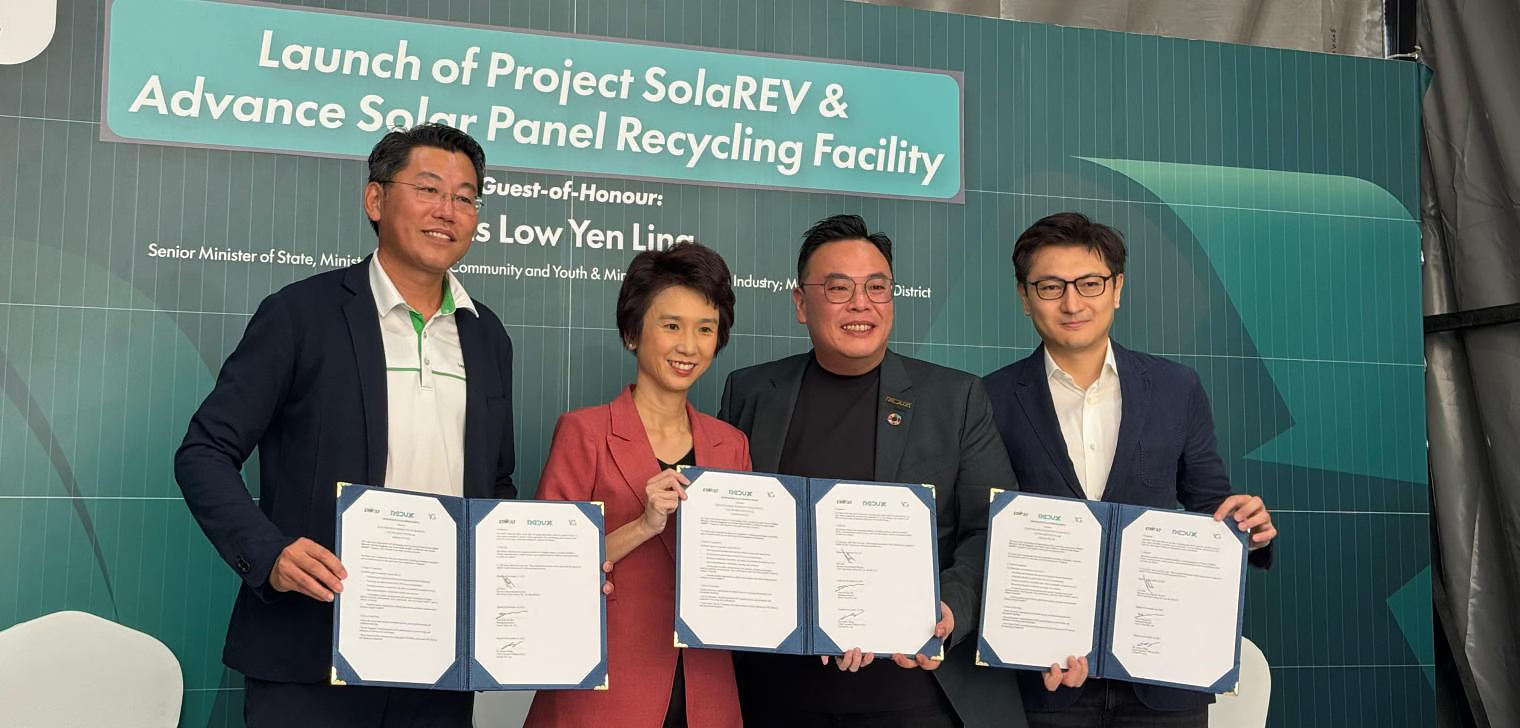
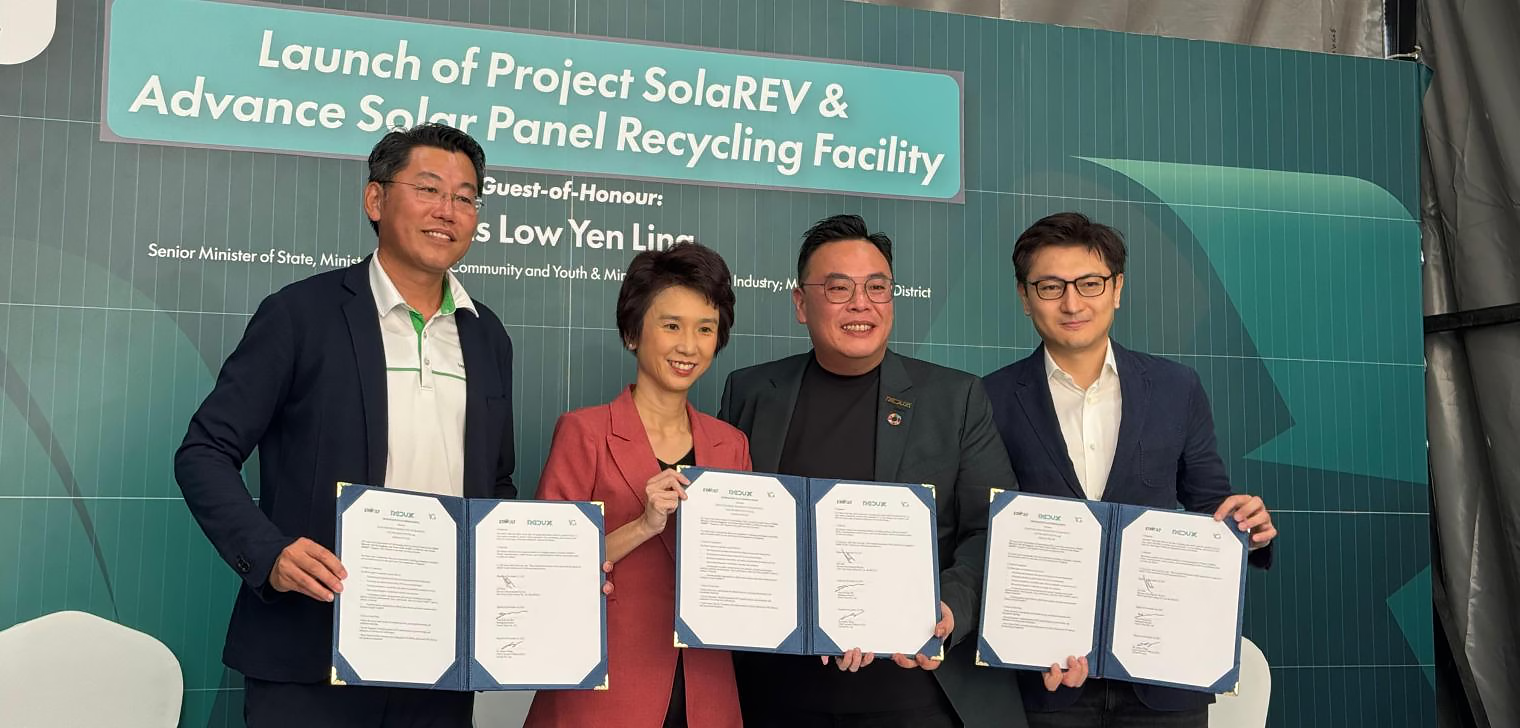
IPI Singapore facilitated EtaVolt’s collaboration with Seah Yong Heng Trading (Redux), leading to the signing of a Memorandum of Understanding to pilot a modular solar panel recycling solution. This collaboration forms part of Project SolaREV, a multi-company initiative involving Redux, EtaVolt and Vector Green to advance solar panel recycling and circularity in Singapore and the region. The recycling system is capable of processing up to 36,000 panels annually and recovering up to 96 percent of materials through energy-efficient operations.
Through these collaborations, EtaVolt strengthened its position as an end-to-end PV lifecycle solution provider, expanding its capabilities across both performance optimisation and circularity. The partnerships enabled the company to expand its circularity model through higher-value material recovery, explore technologies that improve solar efficiency, and validate its solutions through pilot frameworks. Collectively, these outcomes enhance EtaVolt’s readiness to scale while reducing risks associated with technology adoption and ecosystem integration.
"Working with IPI Singapore helped us move faster and with greater confidence. By connecting us to the right partners and opportunities, we were able to validate our technologies, explore new value streams, and reduce the risks typically involved in scaling circular solutions in the solar sector."
"By scoping EtaVolt’s needs and connecting the company with the right partners at different stages of its innovation journey, IPI Singapore accelerated capability development, reduced collaboration risks, and supported EtaVolt’s progression from technology development to pilot validation and ecosystem integration."
As solar adoption accelerates and earlier generations of panels reach mid-life, the industry faces a growing need for solutions that improve performance while ensuring responsible end-of-life management. In Singapore and across the region, this shift is driving interest in circular systems that support the entire PV lifecycle, from optimisation and maintenance to recycling and material recovery. EtaVolt is one of the companies shaping this transition.
As a deep-tech spin-off from Nanyang Technological University, EtaVolt develops technologies spanning panel regeneration, lifecycle reassessment and sustainable recycling. As the company expanded its capabilities, it sought to strengthen its circularity model and explore new ways to create value across the solar ecosystem.