GIIAVA’s partnership with NUS, sparked off by IPI, aims to repurpose low-grade vegetable oil for higher value-added uses, which increases revenue yet benefits the environment.
Dr Yashodhan Bhawe stood in front of several large tanks, looking puzzled. He was expecting a straightforward scale-up for a new vegetable oil upgrading process, but things turned awry when “big masses of blobs” were produced instead.
It was an expensive lesson, recalled GIIAVA’s Technical Director. One that took a significant chunk out of a six-figure budget from the project. Scaling up an oil bleaching treatment which removes contaminants, allowing the extracted oil to be used for higher-value purposes, was proving to be a challenge.
Today, after further refinements with research partner National University of Singapore (NUS), GIIAVA has designed a smoother and more eco-friendly system to extract, bleach and mass produce the vegetable oil — thereby generating a new and sustainable revenue stream.
Identifying roadblocks to fully utilise vegetable oil
GIIAVA is a leading manufacturer of lecithin products, which are food additives sourced from vegetable oils. Based in India and Singapore, its offerings include lecithin liquid and powder, which are produced in a plant on Jurong Island.
During the initial processing stages, soybeans are crushed to extract oil, which is then mixed with hot water to produce soy lecithin. Along the way, unsuitable substances that affect product shelf life are removed, along with some vegetable oil.
While the removed oil is still useful, its darker coloured appearance from being mixed with the other by-products often results in a lower fetching price or being disposed of. “Most consumers are very sensitive to colour and appearance,” explained Dr Bhawe. “A lot of compounds and mixtures that are usable at high-value applications are unmarketable due to these defects.”
To lighten the colour, hydrogen peroxide is typically mixed with the oil by-products to oxidise the contaminants. However, the process takes four to eight hours and requires a high temperature of 60 to 80 degrees Celsius, which uses a lot of energy.
GIIAVA, which exports its products across 35 countries globally, decided to find a partner with the know-how to optimise the chemical reaction and upcycle the oils more efficiently.
Introducing opportunities for open innovation
In December 2015, IPI introduced GIIAVA to Associate Professor Yang Kun-Lin from the Department of Chemical and Biomolecular Engineering at NUS, which had patented a market-ready solution.
With NUS’ catalytic hydrogel beads with metal complexes — the fruit of research work that took about five years — the process could be completed more efficiently within 60 minutes at room temperature.
This collaboration not only saves time and costs, but the lower energy consumption also reduces any negative impact on the environment.
“Our initial target wasn’t oil bleaching,” said Prof Yang. “We were interested in treating industrial wastewater with our bioprocessing technology. But after we met GIIAVA, we realised there could be a potential application in oil bleaching too.”
As the catalytic hydrogel beads turn GIIAVA’s oil byproducts from an unappealing dark brown shade to a lighter hue, Dr Bhawe estimates that the by-products can be sold for a higher price with its more “palatable” colour.
Overcoming difficulties in scaling up
By the start of 2019, NUS was able to create a solution in the lab and gave GIIAVA an exclusive licence in September that year to replicate the process at the manufacturing level.
“Normally, researchers develop the solution first before we start looking for customers,” said Prof Yang. “But Yash provided an opportunity that allowed us to tackle a real-life problem – that’s the benefit of having an industrial collaborator.”
In return, Dr Bhawe has found Prof Yang’s input invaluable. Scaling up production was a struggle at first. For instance, the catalytic hydrogel beads were found to be “too soft” for industrial processes, he shared.
But with Prof Yang’s expertise, the kinks were ironed out quickly and a sturdier version was made within a short period of time.
“It was quite useful to work with an academic who understood the constraints that an industrial sector partner would have,” said Dr Bhawe.
Besides the end goal of cranking up the output, factors such as the extent of contact between ingredients during the mixing process had to be considered as well.
“With a 100ml beaker, it’s fairly easy to mix the molecules well. But with a 10-tonne beaker, it’s different,” said Dr Bhawe. “Through trial and error, building mechanisms and scaling up tenfold at a time, we overcame some of the challenges and have developed some tricks internally to optimise mixing.”
Taking the collaboration to greater heights
For GIIAVA, the biggest success of the collaboration is not just more financial gains for the company but the environmental benefits it reaps. Through upcycling, less oil is disposed of and the raw materials used can be maximised, which helps to conserve the planet’s resources in the long run.
“In chemical engineering, we are always taught to ‘close the cycle’, so you need to know where products are exiting,” said Dr Bhawe. “We are cleaning up our cycle so we know that every output is adding value to the economy, as opposed to ‘disposing’ of it at a lower cost.”
Once this upcycling process for vegetable oil achieves consistent results in Singapore, GIIAVA hopes to deploy this technology in its six other plants in India – its main market.
“Our company’s group strategy is focused on India, a market that’s developing quite rapidly,” said Dr Bhawe. “We would like to go global but we want to start with a familiar region before expanding.”
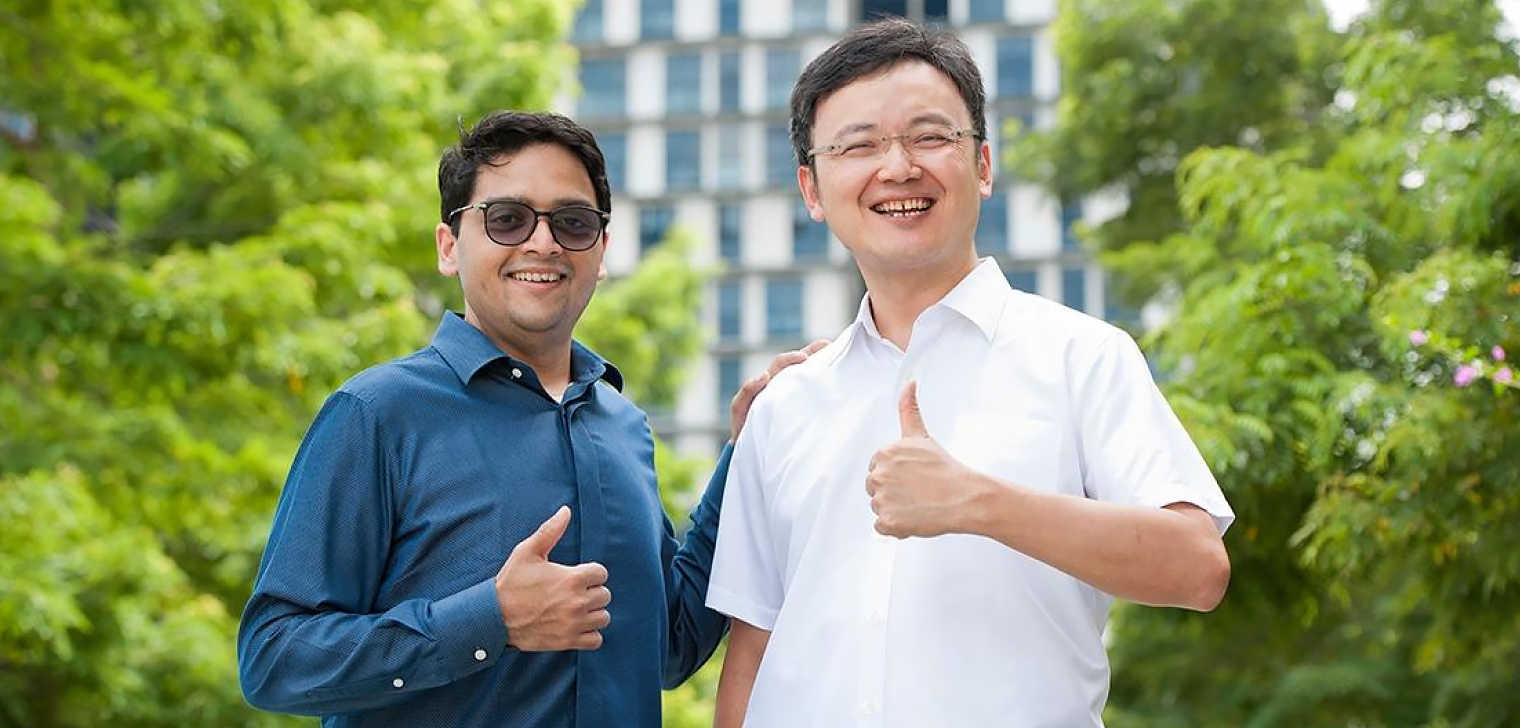
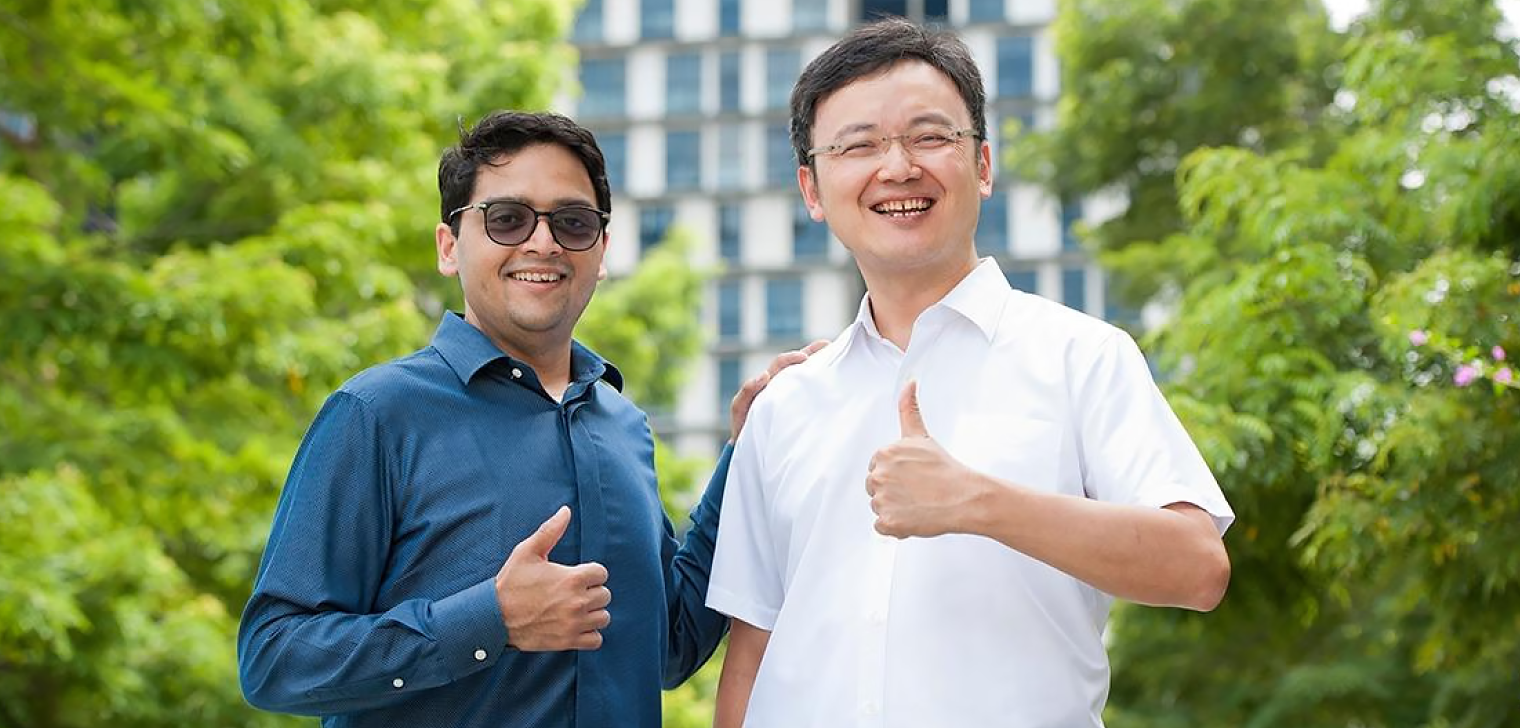
GIIAVA, a major producer of lecithin products, faced a significant challenge in maximising the value of its vegetable oil by-products. During the lecithin extraction process, soybeans are crushed to extract oil, which is then mixed with hot water to produce soy lecithin. However, this process also removes certain substances and some vegetable oil, resulting in a by-product that is darker in colour and less appealing to consumers. Despite retaining its usefulness, the dark appearance of the oil by-product—caused by being mixed with other by-products—meant it fetched a lower price or was often disposed of entirely. As Dr Yashodhan Bhawe, Technical Director at GIIAVA, explained, “Most consumers are very sensitive to colour and appearance. A lot of compounds and mixtures that are usable at high-value applications are unmarketable due to these defects.” The conventional method to lighten the oil’s colour involved mixing it with hydrogen peroxide to oxidise contaminants. However, this process was time-consuming, taking four to eight hours, and required high temperatures of 60 to 80 degrees Celsius, leading to substantial energy consumption and operational costs. These inefficiencies limited GIIAVA’s ability to upcycle the oil by-products efficiently and sustainably, constraining both revenue potential and environmental performance. Seeking to optimise the chemical reaction and upcycle the oils more efficiently, GIIAVA needed a partner with the expertise to develop a faster, more energy-efficient, and eco-friendly solution that could be scaled up for industrial use.
IPI Singapore introduced GIIAVA to Associate Professor Yang Kun-Lin from the Department of Chemical and Biomolecular Engineering at the National University of Singapore (NUS) in December 2015, facilitating a partnership that leveraged NUS’s patented, market-ready catalytic hydrogel bead technology. Through this collaboration, GIIAVA gained access to NUS’s catalytic hydrogel beads with metal complexes, a technology developed over five years of research. Unlike the traditional bleaching process, this innovative solution enabled the oil bleaching process to be completed within 60 minutes at room temperature, drastically reducing both time and energy requirements. The lower energy consumption not only led to cost savings but also reduced the environmental impact of the process. IPI’s role was pivotal in connecting GIIAVA with the right research expertise and facilitating the technology transfer. By September 2019, NUS had created a scalable solution and granted GIIAVA an exclusive licence to replicate the process at the manufacturing level. The partnership enabled GIIAVA to transform its oil by-products from an unappealing dark brown shade to a lighter, more marketable hue, unlocking new revenue streams and supporting the company’s sustainability goals.
"Most consumers are very sensitive to colour and appearance. A lot of compounds and mixtures that are usable at high-value applications are unmarketable due to these defects."
"Our initial target wasn’t oil bleaching. We were interested in treating industrial wastewater with our bioprocessing technology. But after we met GIIAVA, we realised there could be a potential application in oil bleaching too."
"It was quite useful to work with an academic who understood the constraints that an industrial sector partner would have."
GIIAVA is a leading manufacturer of lecithin products, which are food additives sourced from vegetable oils. Based in India and Singapore, its offerings include lecithin liquid and powder, produced in a plant on Jurong Island. The company exports its products across 35 countries globally.